
Wandering Ridge shares practical, down-to-earth guidance on uk hillwalking and countryside rambling for readers across the UK.
- 0123456789
- Angle Bd Abdelmoumen & rue soumaya, Résidence
- [email protected]
Wandering Ridge shares practical, down-to-earth guidance on uk hillwalking and countryside rambling for readers across the UK.
 By Sophie Radcliffe
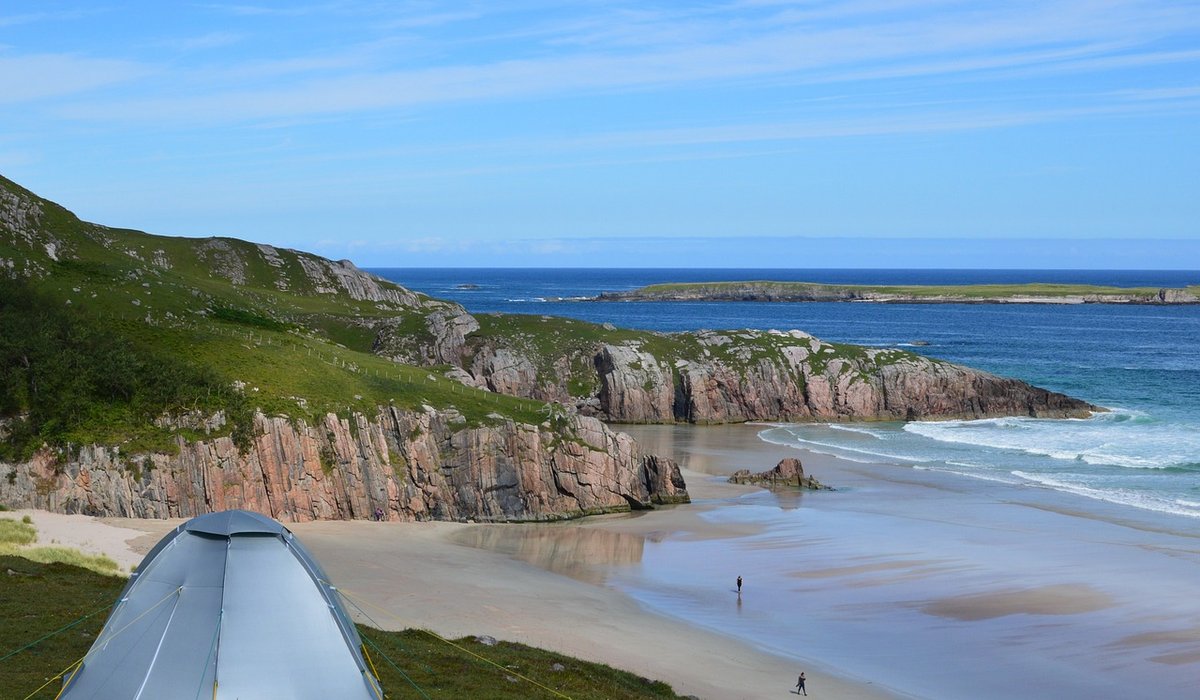
Inland, a poor forecast usually means you get wet. On a clifftop, it can mean you can't stand up. Coastal walking adds three things to the usual equation: wind with nothing to break it, weather generated by the sea itself, and a complete absence of shelter. A temperature of 14°C tells you almost nothing about whether a headland is walkable. Wind direction, gust speeds, visibility and shower timing tell you nearly everything.
None of this is a reason to stay at home. It's a reason to read the forecast properly, and to read it twice.
Start with where the wind is coming from. A brisk south-westerly is a completely different proposition on a north-facing cliff path than on a south-facing one. Two walks ten miles apart can be a gentle stroll and a battle, purely because of which way the cliffs face.
Then consider fetch — the stretch of open water the wind has crossed to reach you. A westerly arriving off the Atlantic carries far more energy than the same wind speed coming off a sheltered bay. On an exposed headland, it's the gust figure that matters rather than the average. Sustained winds of force 5 (19–24 mph) are perfectly manageable on a low path; gusts of 45 mph on a cliff edge are not, especially on ground where a stumble has consequences.
Watch for the phrase "stronger on exposed coasts and headlands". That's the forecast telling you exactly where you're planning to walk.
Visibility is the most under-read part of any coastal forecast. Sea fret — also called haar or coastal fog — can sit on one stretch of coast while the next bay is in sunshine. It forms when warm air moves over a cold sea, which is why it's most common on east-facing coasts in late spring and early summer.
This matters twice over. Cliff paths often have few features and poor sight lines, so if you can't see the next headland, a map, compass and a clear sense of which way the coast runs become essential rather than optional. And rescue teams and coastguard helicopters cannot fly in fog. If something goes wrong in poor visibility, help may be delayed.
"Scattered showers" and "rain, heavy at times" describe very different days. A 40% chance of showers with sunny intervals usually means two or three short soakings and plenty of bright spells in between. An organised band of rain means hours of it.
Look at the hour-by-hour forecast rather than the daily headline, and note when the weather is due to change. If a front is arriving at 3pm and your route crosses an exposed headland at 2pm, you can plan around it. Pay attention to squally conditions too — the sudden gusts associated with heavy showers arrive with very little warning and are considerably stronger than the general wind speed.
The night-before check answers one question: is this walk worth committing to? The morning check answers the practical ones. Forecasts shift, and a twelve-hour gap is long enough for a marginal day to become either a good one or a daft one.
On the second check, look for the trend as much as the numbers:
If you can find a coastal or inshore waters forecast, use it alongside the general one. It covers sea state and coastal wind detail that a general forecast simply doesn't.
Carry waterproofs regardless of the forecast — wind-driven rain on a coast is relentless and there's nowhere to shelter. Add a hat and gloves even in summer; wind chill on an exposed headland can knock ten degrees off how warm it feels. A paper map and compass, a charged phone in a dry bag, and enough food and drink to cover a delay are all standard.
Decide your turning points before you set off, and be willing to use them. Turn back or drop to a lower, inland route if you find yourself leaning into the wind, if spray is reaching the path, if visibility closes in below the distance to your next safe exit, or if the group is strung out and struggling to communicate.
The coast rewards a bit of homework. Two checks of the forecast, with your attention on wind, visibility and showers rather than temperature, will keep you walking there for years.


We are not gonna make spamming
